Imagine, putting down your hard earned money on that beautiful Gibson Les Paul you have always wanted. The advert says genuine Gibson, hate to part with it but need a new boiler,baby on the way etc… You get it home and it looks great, plays pretty well and you think I’ll take this to my local engineer and get some new strings and a setup on this baby! How do you feel when your guitar tech turns to you and says “did you know this isn’t a real Gibson?”
There are a few Les Paul copies that are either licenced or don’t claim to be Gibsons. Unfortunately, there are some guitars with Gibson written on the headstock that are fakes. Some you can spot because Gibson has been either spelt wrong or is just badly written. There are a number however that to the naked eye look identical except as an instrument, and this is the problem. Here are a few tips on what to look for that can help spot one.
1-Truss rod adjuster. This is biggest giveaway if it’s real or fake. Gibsons never use a standard Allen key to adjust them.
2-Gibson is stamped onto the tone and volume pots. If the seller tells you they have been replaced and it’s got the correct truss rod key chances are it’s real.
Many of these Les Paul copies are actually really decent guitars, if you realise that’s what you’re getting. The problem arises when you’re unwittingly sold a fake, this is fraud and, therefore illegal. Make sure you check what you’re buying, and if in doubt give it a miss.
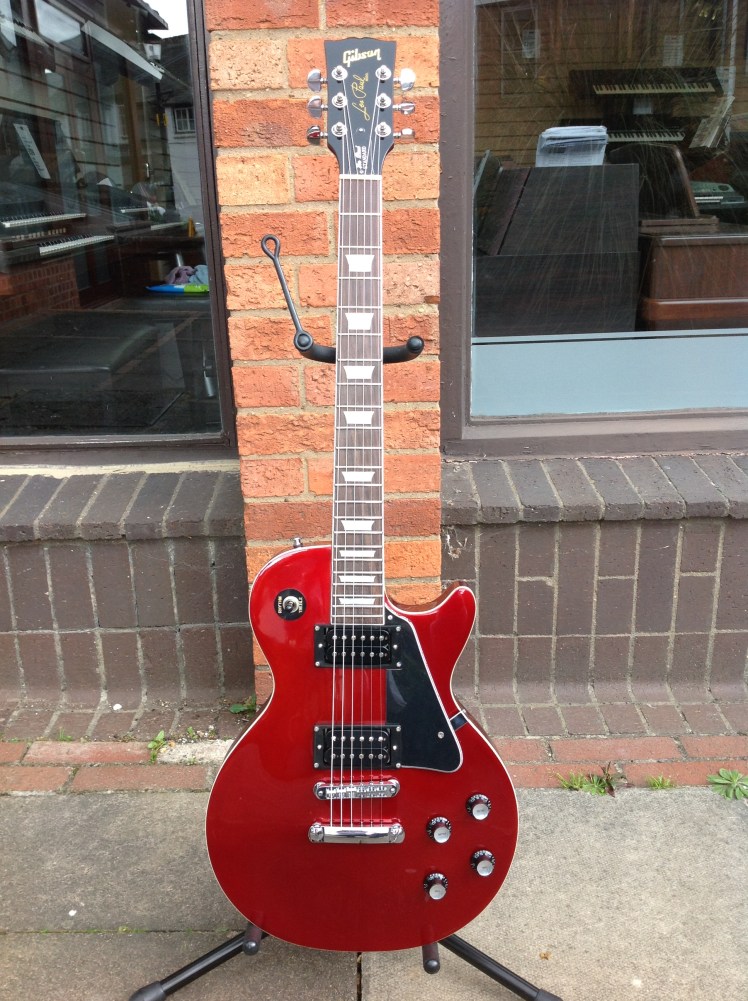
The images below show a classic, genuine Les Paul at the top and a copy below. Very hard to spot the copy. However, after some extensive rewiring and a set up it’s sounding great and is a tidy guitar.

 Roberts Instrument Repairs and Accessories